

Ranked mode in battle royale represents the competitive core of modern survival multiplayer games. Designed for players seeking structured progression and skill-based challenges, it replaces the unpredictability of casual play with performance-driven evaluation. Unlike standard playlists, ranked mode prioritizes balanced matchmaking, ensuring players face opponents of comparable skill. This creates meaningful, competitive experiences where improvement is measurable and every match matters.
Transparent ranking systems provide clear benchmarks, motivating players to refine strategies, master mechanics, and climb the leaderboard. By emphasizing strategy, consistency, and adaptability, ranked mode not only tests individual skill but also fosters a deeper understanding of game dynamics, making it the ultimate arena for players striving to achieve mastery in the battle royale genre.
Ranked Mode in Battle Royale: Professional Analysis
Ranked mode in battle royale provides a structured competitive framework for measuring skill, tracking progression, and sustaining long-term player engagement. It drives retention, supports esports growth, and cultivates player mastery within modern battle royale ecosystems.
Unlike casual playlists, ranked mode prioritizes consistent performance, strategic decision-making, risk assessment, and team coordination, offering players meaningful challenges and measurable improvement.
Read More: Top Battle Royale Skills & Perks – Ultimate Competitive Player Guide
Evolution of Ranked Mode in Battle Royale
Early battle royale games emphasized chaotic survival, random encounters, and minimal competitive structure. Rising player demand for meaningful progression pushed developers to introduce ranked modes. Features like competitive ladders, visible tiers, and seasonal resets shifted the genre from a casual survival sandbox to a structured competitive environment.
Adoption of ranked modes accelerated after success in shooter esports, tactical multiplayer ladders, and skill-based matchmaking studies. Developers saw longer session times, stronger player loyalty, and increased monetization, solidifying ranked mode as a core element in modern battle royale design.
Core Design Philosophy of Ranked Mode in Battle Royale
Ranked mode in battle royale is designed to balance fairness, challenge, and clear rewards. Key objectives include:
- Showcasing player skill
- Ensuring transparent progression
- Maintaining competitive integrity
- Minimizing randomness
- Encouraging long-term mastery
Each ranked mode implementation strives to balance survival placement, combat performance, and team coordination, creating a competitive environment that rewards strategy, consistency, and player growth.
Ranking Structure in Battle Royale Ranked Mode
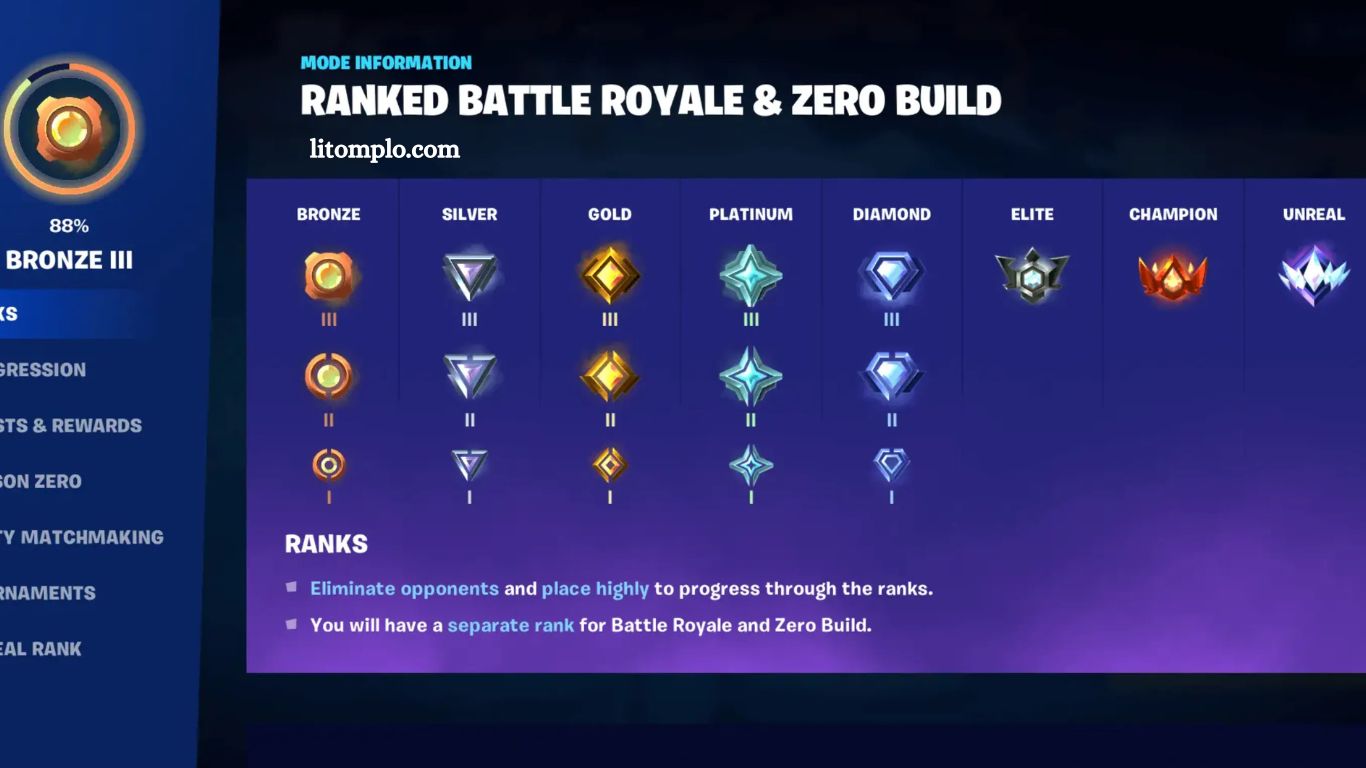
Most ranked battle royale systems use a tiered hierarchy, typically including:
- Bronze
- Silver
- Gold
- Platinum
- Diamond
- Master
- Apex or Champion
Tiers are often subdivided, requiring players to accumulate points for promotion. Advancement rewards consistent performance rather than isolated victories. Higher tiers represent elite skill levels, with more formidable opponents, stricter progression thresholds, and greater performance demands, ensuring that only the most skilled and strategic players reach the top ranks.
Matchmaking Logic in Battle Royale Ranked Mode
Ranked battle royale matchmaking emphasizes competitive fairness by combining hidden rating metrics with visible ranks. Key factors include:
- Win consistency
- Elimination efficiency
- Survival duration
- Historical performance trends
Higher-tier matchmaking pools tighten, prioritizing fair competition over shorter queue times. Cross-platform ranked modes further account for input type, latency, and platform-specific skill normalization, ensuring balanced matches across diverse player bases. This system creates challenging, rewarding experiences that accurately reflect player skill and encourage long-term progression.
Scoring Systems in Battle Royale Ranked Mode
Ranked mode progression relies on point-based scoring that evaluates multiple performance factors:
- Final placement
- Eliminations
- Assists
- Damage contribution
- Team survival impact
Higher placements provide exponentially greater rewards, while early eliminations can result in point deductions to discourage passive play. Advanced systems further adjust kill value based on lobby difficulty and opponent rank, ensuring that scoring accurately reflects both individual skill and strategic contribution. These mechanisms promote consistent performance, teamwork, and mastery over time.
Risk vs. Reward in Battle Royale Ranked Mode
Strategic depth in ranked battle royale arises from careful risk evaluation. Aggressive play can yield high elimination rewards but increases the risk of elimination, while passive survival preserves placement but limits point gains.
Optimal strategy balances controlled aggression, map awareness, rotation timing, and engagement choices. Elite players succeed by selecting fights efficiently and maximizing reward potential, demonstrating mastery through strategy rather than reckless pursuit. This balance ensures competitive integrity while rewarding skillful decision-making.
Team Dynamics in Battle Royale Ranked Mode
Squad-based ranked battle royale emphasizes coordination and teamwork. Success relies on:
- Efficient communication
- Role specialization
- Strategic resource distribution
- Revival prioritization
Systems discourage solo-focused play through assist credits, shared placement rewards, and penalties for abandoning teammates. In contrast, solo ranked modes highlight mechanical skill, independent decision-making, and adaptability, offering a distinct challenge that tests individual mastery while maintaining competitive integrity.
Competitive Rule Variations in Battle Royale Ranked Mode
Ranked battle royale often modifies standard rulesets to enhance competitive fairness:
- Reduced loot randomness
- Predictable drop distribution
- Balanced weapon pools
- Restricted experimental mechanics
These adjustments minimize luck, promote consistent performance, and reinforce the competitive integrity of ranked play, ensuring that skill and strategy, rather than chance, determine success.
Seasonal Structure in Battle Royale Ranked Mode
Ranked battle royale operates through structured seasonal cycles, each introducing:
- Partial rank resets
- Reward distribution
- Meta adjustments
- Map rotations
Seasons maintain player engagement, prevent permanent rank stagnation, and encourage consistent activity through rank decay mechanics. This cyclical structure refreshes competitive environments, motivates progression, and keeps gameplay dynamic and challenging throughout each season.
Rewards and Incentives in Battle Royale Ranked Mode
Ranked mode rewards extend beyond cosmetics, offering tangible recognition for competitive achievement. Incentives include:
- Exclusive skins
- Rank badges
- Profile banners
- Leaderboard recognition
- Tournament qualification eligibility
These rewards enhance the visibility of accomplishments and motivate players to pursue higher ranks. By combining prestige, personalization, and competitive opportunity, ranked mode creates a compelling progression system that encourages long-term engagement and mastery.
Psychological Impact of Ranked Mode in Battle Royale
Ranked battle royale introduces psychological pressures not present in casual play, including ranked anxiety, performance stress, and loss aversion, all of which shape player decision-making.
Well-designed ranked systems mitigate these effects through loss reduction, demotion protection, and clear scoring feedback. These features maintain motivation, support consistent engagement, and preserve a sense of competitive challenge, ensuring that players remain invested while managing the mental demands of high-stakes play.
Skill Development Pathways in Battle Royale Ranked Mode
Ranked mode accelerates player skill growth through:
- Consistent challenge scaling
- Performance feedback loops
- Exposure to advanced tactics
- Adaptation to evolving metas
Players gain measurable improvement in aiming precision, positioning, rotation efficiency, and engagement discipline. By providing structured challenges and clear performance feedback, ranked mode fosters continuous learning, strategic refinement, and mastery of core mechanics, making it a critical environment for both casual players seeking growth and competitive players pursuing elite performance.
Meta Evolution in Battle Royale Ranked Mode
The ranked mode meta evolves as top-tier players discover and optimize strategies. Weapon preferences, landing spots, and rotation paths shift each season, influencing competitive play patterns.
Developers use ranked mode data to guide balance patches, adjust competitive tuning, and implement long-term health improvements. This dynamic meta encourages strategic adaptation, rewards innovation, and ensures that the ranked environment remains challenging, engaging, and reflective of player skill progression.
Anti-Cheat Enforcement in Battle Royale Ranked Mode
Maintaining competitive integrity requires robust anti-cheat measures. Ranked battle royale playlists implement proactive anti-cheat systems, behavioral monitoring, and reporting tools to detect and deter unfair play.
Consequences for violations include:
- Rank resets
- Competitive bans
- Account restrictions
Strict enforcement safeguards the credibility of the competitive ecosystem, ensuring that skill, strategy, and fair play remain the core determinants of success in ranked environments.
Esports Integration in Battle Royale Ranked Mode
Ranked mode serves as a grassroots talent pipeline for competitive play. High-ranking players gain visibility, attracting scouting from professional organizations, tournament invitations, and sponsorship opportunities.
Leaderboards act as a proving ground, with many professional competitors emerging directly from ranked mode. This integration bridges casual play and professional esports, fostering skill development, competitive exposure, and long-term career pathways within the battle royale ecosystem.
Monetization Alignment in Battle Royale Ranked Mode
Ranked mode indirectly drives monetization by boosting player retention, creating demand for cosmetic prestige, and complementing battle pass progression. Developers ensure competitive integrity by avoiding pay-to-win mechanics, maintaining player trust while encouraging engagement with cosmetic and progression-based revenue streams. This alignment reinforces long-term ecosystem sustainability without compromising fairness or skill-based competition.
Accessibility Considerations in Battle Royale Ranked Mode
Modern ranked battle royale systems integrate accessibility features to support new and diverse players. Key elements include:
- Clear progression explanations
- Comprehensive onboarding tutorials
- Skill-based early matchmaking
These features lower barriers to entry, reduce intimidation, and guide players through the competitive environment, all while preserving the depth and challenge that define ranked play. Accessibility integration ensures a fair, engaging, and inclusive experience for all skill levels.
Challenges and Criticisms in Battle Royale Ranked Mode
Ranked battle royale faces several ongoing challenges, including:
- Smurf accounts
- Rank inflation
- Queue imbalances
- Communication toxicity
Addressing these issues requires continuous iteration and system refinement to maintain fairness, competitive integrity, and player satisfaction. Practical solutions are critical for sustaining a healthy ranked ecosystem and ensuring long-term engagement.
Frequently Asked Questions
What is ranked mode in battle royale?
Ranked mode is a competitive playlist where players progress through tiers based on skill, performance, and consistency.
How does matchmaking work in ranked mode?
Matchmaking uses hidden skill ratings and visible ranks to pair players with similarly skilled opponents, balancing fairness and challenge.
What rewards can players earn?
Rewards include exclusive skins, rank badges, profile banners, leaderboard recognition, and tournament eligibility.
How is scoring calculated?
Scoring considers final placement, eliminations, assists, damage, and team contribution, rewarding both survival and combat performance.
Can ranked mode affect skill development?
Yes, it promotes skill growth through consistent challenges, performance feedback, strategic adaptation, and meta-awareness.
Are there measures against cheating?
Ranked mode employs anti-cheat systems, behavioral monitoring, and penalties like rank resets or bans to maintain competitive integrity.
How often do ranks reset?
Seasons introduce partial rank resets, reward distribution, meta adjustments, and map rotations to refresh competition and maintain engagement.
Conclusion
Ranked mode in battle royale transforms casual survival gameplay into a structured, competitive environment. By emphasizing skill-based progression, strategic decision-making, and team coordination, it challenges players while rewarding mastery. Seasonal cycles, balanced matchmaking, and dynamic scoring systems ensure fairness and continuous engagement. Beyond gameplay, ranked mode fosters esports talent, motivates long-term participation through rewards, and drives healthy monetization without compromising competitive integrity.
